

|
Getting your Trinity Audio player ready...
|
What makes a Journal Submission Support Service unique?
Before diving in to these features, a short story:
“Finally! My manuscript is ready for submission! Let’s see… I need an account in the journal”
5 minutes later
“Right, that’s done. Filling the form and uploading the documents now…”
10 minutes later
“Wait, they need the abstract to be uploaded separately as well as included in the manuscript? Alright, I’ll copy it here…”
“A formatted manuscript. But the instructions said formatting was optional, do I still need to format it?”
“Oh, and how did I miss this? They need a separate document for supplementary materials…”
“And what’s an AI declaration statement?”
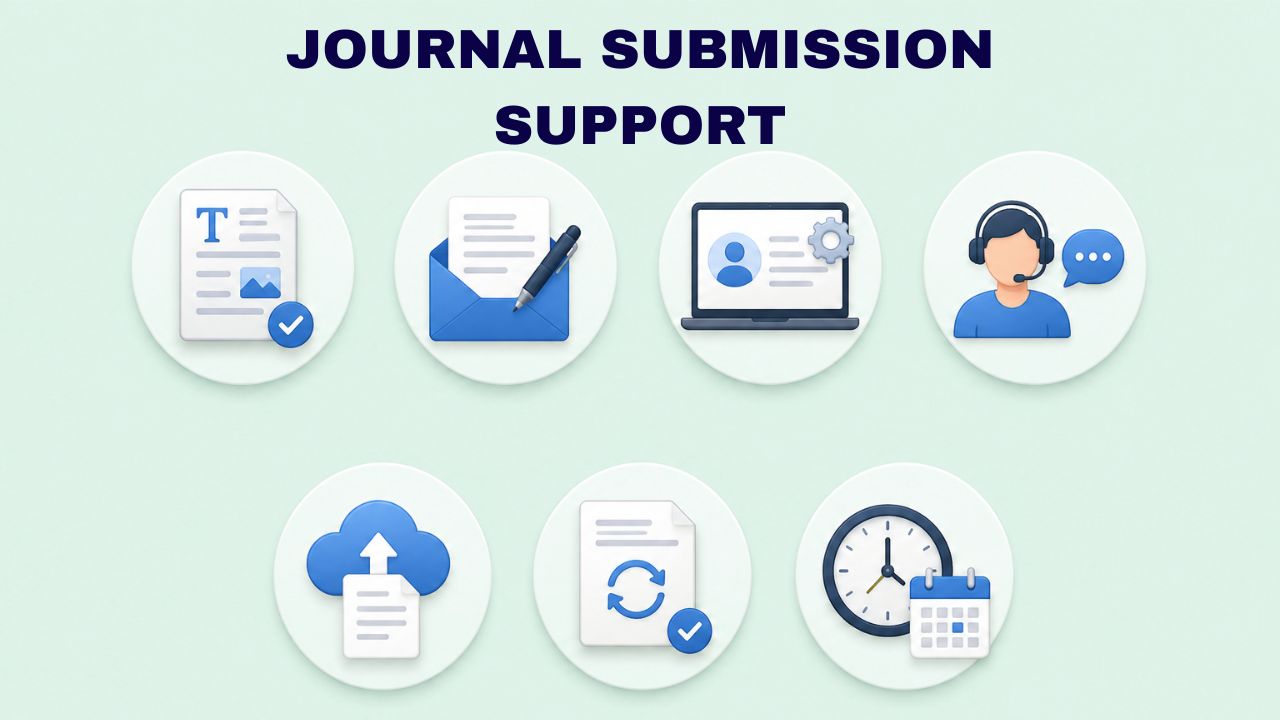
If you have experienced this, know that professional support systems exist for exactly this reason! To help busy researchers like you navigate the complex steps of journal submission without making you feel overwhelmed. Here are 7 features you should look for when selecting a journal submission support service.
1. Manuscript Formatting Support
Journals typically recommend a specific format for initial paper submissions. There may not always be a template available. But a set of guidelines will be provided. A good journal submission support service ensures that all formatting requirements are satisfied:
- Structured vs. unstructured abstract
- Word count limits/Page count limits
- Line spacing, margins, headings, and overall layout
- Inclusion of necessary disclosure statements (e.g., conflicts of interest, data accessibility, AI use disclosure)
- Figure and table formatting
A professionally formatted submission creates a great first impression and expedites the review process. So, look for a support system that offers thorough manuscript formatting.
2. Cover Letter Creation
All journal submissions require a cover letter. A cover letter is what the journal editor first reviews to decide whether your research paper is worth evaluating for publication in their journal. So, a strong cover letter is key:
- It must be addressed to the right person (editor-in-chief or section editor) depending on journal instructions
- It should clearly highlight why the manuscript is suitable for publication in that journal
- A cover letter should present a compelling case of why the research is novel
- The key findings and study contributions must be explained without using heavy jargon
All these aspects must be taken care of by experts as part of the journal submission support service.
3. Journal Account Creation and Management
The administrative tasks of managing your submission must be efficiently handled. Creating a journal account, providing the necessary contact information, setting up an author profile, and submitting the required forms should be handled as part of the journal submission support system.
4. Communicating with Journal Editor
Pre-submission inquiries are quite common. Any clarification regarding journal’s submission guidelines is better addressed prior to proceeding with the submission process.
Bust researchers like yourselves are often occupied with multiple research-related tasks, giving you little to no time for carrying out timely communication over emails. This is where a comprehensive journal submission support system can be helpful.
On behalf of you (the author), submission experts will communicate directly with the journal editor. Because of their proficiency in submission management, these experts are adept at communicating effectively to give you complete clarity before submitting your manuscript.
5. Document Uploading
Another feature to look for is whether they support in uploading documents. At times, journals need you to provide multiple documents like
- The main manuscript
- Separate figure files
- Supplementary materials
- Language editing certificate
- Acknowledgement of outsourced tasks
This can be quite time-consuming. Submission experts ensure that all the required documents are uploaded on the journal’s system in the correct file format.
6. Revision and Resubmission Support
After the initial submission, your paper undergoes a critical evaluation as part of the peer review process. It is highly likely for the journal editor to request changes in your manuscript per the peer review feedback. A strong journal submission support service should ideally include post-submission support as well.
This involves
- Reviewing your revised manuscript for accuracy, logical flow, and correct formatting
- Cross-checking whether revisions match suggested changes
- Ensuring compliance with journal requirements
- Submitting the modified manuscript back to the journal along with peer review responses
Look for a service that provides such end-to-end support.
7. Timely Submission Support
Time is of the essence in research publication. Any delay in meeting journal’s submission deadlines, responding to emails from the journal editor, or uploading the required files in the suggested format could cost you precious time, impeding your publication process.
Look for a professional journal submission support system that’s well-established in the industry. You need someone who is familiar with the academic landscape and has supported researchers successfully. Read user testimonials or consult your peers on their experience of collaborating with the service. Choose a journal submission support service only after careful consideration of all the features of the service.
Conclusion
Expert-handled submission management helps expedite the publication process, giving you a higher chance of paper acceptance. From manuscript formatting and cover letter creation to building a strong communication bridge between the author and the journal, Editage’s Journal Submission Support Service serves as a backbone to your publication journey.