
|
Getting your Trinity Audio player ready...
|
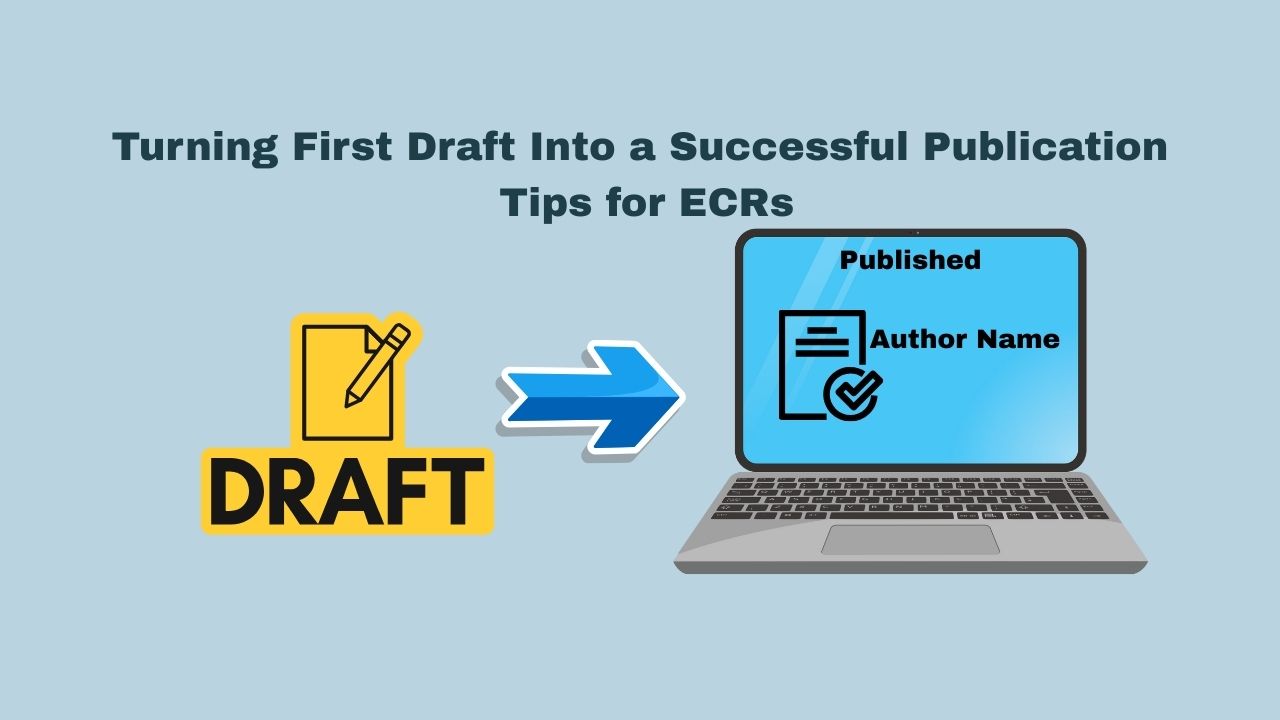
We are all aware of the “Publish or Perish” culture followed in academia. Across the world, researchers disseminate their findings by publishing in academic journals. While this is an age-old way of sharing knowledge, it can be pretty tedious. Apart from the length of the process, the number of rejections and revisions associated with this could make it very hard for many researchers to thrive. However, not all is bad with the current publishing process, and with the right tips and tricks, early-career researchers (ECRs) can easily navigate its complexities. If you’re an ECR in the US, mainly a first-gen PhD student or someone without entrenched networks, this article is a tactical playbook.
The publishing landscape for ECRs
Hidden expectations you won’t find in a handbook
Practical, high-impact steps you can immediately implement
The time-cost economy: Plan the real hours
Final word: Treat publishing like a skill, not a lottery
The publishing landscape for ECRs
In the US, publishing is an ecosystem, rather than a single pipeline. In this regard, there are various forms of publishing, including peer-reviewed journal articles, conference papers, preprints, data papers, registered reports, brief communications, and methods or software articles. In other words, every given output has a different function. While journal articles are used to carry full arguments, conference papers are used for quick feedback from the community, while preprints are for quick visibility and timestamping. This is in line with the fact that a computer-science faculty search might value the best conference papers, while biomedical funders might value reproducible registered reports and data papers.
Publish-or-perish dynamics thus differ across settings: it is the steady publication of high-impact research papers in research-intensive R1 departments; consistent, field-relevant scholarship in teaching colleges; and faster fundable options for postdocs when considering grant timelines. Although preprints and open science make it easier for papers to achieve visibility and be cited, they carry trade-offs: faster dissemination and proof of priority versus potential scooping fears and varied perceptions of quality in hiring or peer review.
There are two aspects of publishing: an apparent part, like designing or co-designing a study, writing it up in a paper, selecting a journal, submitting, revising, publishing, etc. And then there is a less apparent part, which is more related to culture and logistics, like author roles, writing cover letters, schedules, travel, article processing charges, etc. The prevailing culture in the US values speed (fast turnaround), visibility (pre-prints, conferences), and narrative (how it contributes to the conversation). For ECRs, these expectations collide with limited time, fewer mentoring resources, and, at times, financial constraints—the good news: many of these “hidden” parts are learnable. With a few scripts, systems, and a time budget, you can turn publishing from a mysterious gatekeeper into a repeatable process.
Hidden expectations you won’t find in a handbook
- Negotiate authorship early and explicitly. In many US labs, authorship order is decided informally. If it’s not discussed up front, you’ll inherit someone else’s assumptions. Early conversations prevent awkward fights later.
- Time is currency. Editors and senior co-authors expect fast responses during revision rounds. Delays don’t just lengthen publication time; they change colleagues’ willingness to collaborate.
- Network effects matter. Seminar invites, conference introductions, and collegial visibility influence whether editors glance at your cover letter twice. You can build visibility deliberately without privileged access.
- Both bias and language barriers are real. An individual’s name, affiliation, and non-native English proficiency could make a difference in the perception of the reviewer. Compensate by over-clarifying your methods, using preprints to demonstrate transparency, and seeking language support for your manuscript and cover letter.
- Caregiving and finances shape feasibility. Travel restrictions, family responsibilities, and APCs can slow career progress. Give yourself a realistic publication timeline that accounts for these constraints, and learn which places offer fee waivers.
Practical, high-impact steps you can immediately implement
These are tactical moves—immediate, low-friction, high-return.
Manuscript fundamentals (apply these before your “final” draft)
- Distill your contribution to one line: The reader should understand the take-home in one sentence. Put that sentence in the title/abstract and at the end of the introduction.
- Structure for a busy reviewer: Short introduction (three paragraphs), concise methods (reproducible), results with clear figure labels, and a focused discussion that answers “so what?”
- Reproducibility basics: Include a data availability statement, code or parameter files, and details that explain how another researcher can replicate the main figure.
Submission and journal selection
- Choose fit over prestige. Scan recent issues: Does the journal publish studies like yours? How long are acceptance-to-publication times? What are their APCs?
- For borderline fits, write a two to three-sentence pre-submission inquiry (an editorial check is often faster than a complete rejection).
- Avoid predatory outlets: Verify the editorial board’s credibility, check the indexing, and use Think.Check.Submit as a mental checklist.
Speed and clarity hacks
- Use three-hour focused writing sprints and 30-minute cleanups. Two passes work best: structural pass, then clarity pass.
- Make a “response table” template before reviewer reports arrive. It saves time and reduces stress.
- Preprint first, submit second: You gain visibility and a timestamp that helps with priority claims and job applications.
Exceptional guidance for first-generation and under-resourced researchers
- You are carrying more than the manuscript; acknowledge that and treat publishing as a social project, not just a technical one.
- Build peer communities: Start a manuscript club or “manuscript cafe”—three people, one hour per week, rotating feedback. This replicates mentorship benefits without needing senior gatekeepers.
- Seek institutional supports: Writing centers, graduate student affairs, and postdoc offices often provide editing help, small travel grants, and mentorship mediators. Don’t assume you’re not “eligible”—just ask.
- Ask for waivers and funds explicitly: Many journals and societies have APC waivers; funders sometimes allow dissemination costs. Standardize a short, polite email to request waivers.
- Mentorship contracts: Agree with supervisors on timelines, authorship expectations, and revision responsibilities in writing. A one-page agreement reduces ambiguity and emotional labor.
Handling reviewers, rejections, and career signaling
- Rejection is a data point. Treat reviewers’ comments as a map that shows where your paper didn’t land.
- Classify comments into “must-fix”, “should-fix”, and “nice-to-have.” If you disagree with a reviewer, explain your rationale politely and provide evidence.
- Use an itemized response: Number each reviewer comment, quote it, then respond with changes and line references. Editors appreciate clarity.
- When to appeal: Reserve appeals for clear factual mistakes or ethical issues. Otherwise, revise and resubmit to a better fit.
- Build a publication narrative: Hiring and tenure committees care about coherence. Show how your papers form a program of research—methods, thematic arc, reproducibility.
The time-cost economy: Plan the real hours
A common oversight is underestimating the hours outside the lab needed to publish. Reformatting, figure polishing, and correspondence can add 40-80 hours across rounds. Create a time budget at submission: estimate two to four weeks of admin/revision work and block that time. If you’re caregiving or working multiple roles, double that estimate.
Final word: Treat publishing like a skill, not a lottery
Publishing your research story as an ECR in the US requires a mix of multiple skills. There are some barriers that will always exist, such as bias, money, and caregiving. But you can easily minimize these disruptions as an ECR by making a few specific habits, such as negotiating authorship early, allocating real time for revisions, creating peer support systems, and scripting difficult conversations. These small actions add up to an effective publishing process, making your manuscript clearer, faster, and more likely to be considered on its own science-based merit, rather than your network.