

|
Getting your Trinity Audio player ready...
|
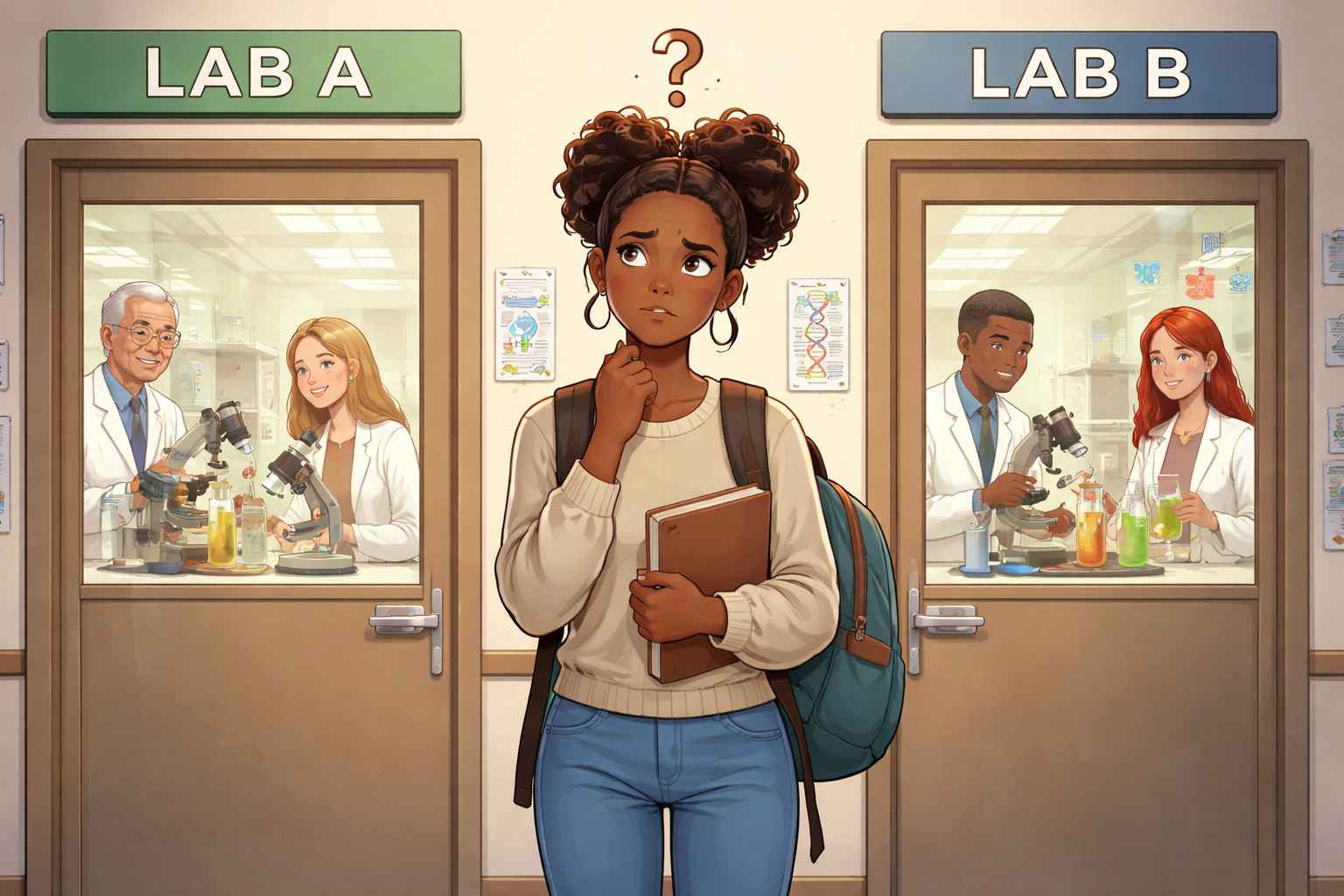
Switching labs during your PhD or in graduate school can be made easier with a well-thought-out strategy and by engaging in productive conversations with your advisor, department head, etc. This article lists out some practical steps grad school or PhD students can take to make the transition smooth and to gain maximum benefits from lab switching.
1. Understand your reasons for switching
2. Research your new lab thoroughly
3. Consider visa requirements if you’re not a US citizen
6. Exit clearly
7. Do not burn bridges unnecessarily
1. Understand your reasons for switching
If you feel your current lab isn’t the right fit for you, sit down and write out exactly why. List what exactly isn’t working for you, what steps you have done to alleviate the situation, and what has been the outcome of those steps. Some examples are
- My mentor has cancelled more than 50% of our meetings in the last six months. I’ve reached out via text and email and offered online meetings but I have had no response.
- I feel like I’m micromanaged and have zero say in what I do on a day-to-day basis. I’ve had a conversation with my advisor but nothing has changed after that.
- The work being done in this lab is only tangentially related to what I’m interested in. My mentor is interested in a different line of research and does not have the bandwidth to advise me.
2. Research your new lab thoroughly
It may be trite but don’t jump out of the frying pan into the fire, or cross the river looking for greener grass that actually turns out to be fake turf. It’s great to be in the same lab as your friend or to work with a world famous researcher in your field, but it’s no use if the new lab doesn’t actually benefit your research career. We suggest that you
- Check the publication record of the new lab, and see how many students are authoring/co-authoring papers
- Talk to seniors or postdocs in the lab who have published papers
- Ask current students specific questions about their PI’s management style, work-life balance, lab culture, and daily operations
- Look where the majority of alumni are working or what they are doing
3. Consider visa requirements if you’re not a US citizen
If you are an international student holding an F-1 or J-1 visa hold, you must keep your university’s International Student Office in the loop before you switch labs. The process is generally complication-free if you’re moving to a new lab within the same department of your university. But it is much more complicated if you’re switching labs to a new institution, because then you are also changing your visa sponsor. Your new research topic should also be within the scope of your original visa approval. It’s essential for non-US citizens to maintain a lawful status while switching labs. In case of any doubts, talk to an immigration lawyer to make sure you’re not bending or breaking any visa rules.
4. Check your funding
In many cases, your stipend and research budget are also tied to your PI’s grants. When you’re switching labs, make sure your funding is secure and guaranteed for multiple years, especially if you’re in the early stages of your research project. In case you yourself have external funding, such as a grant, verify in advance whether it is applicable to your new lab and your new research focus.
Pro Tip: Examine your new PI’s recent publications and grants to verify that they have a good funding track record and the capacity to fund your project.
5. Evaluate timelines
You’ll need to account for delays in timelines to your career/publication goals as well as your PhD itself. There’s often a sunk cost: you’ve to leave behind whatever work you’ve already done and start a new project from scratch. Be realistic about the number of months or years you will need.
6. Exit clearly
Exiting can often be the most stressful part of switching labs. Take time to prepare a proper exit strategy and message. To start decide your end date and how much you can be involved after that if necessary for minor/consultative tasks (e.g., making changes to a research paper). Set up a meeting with your PI/advisor, preferably in person. During your meeting,
- Be professional and polite
- Keep the focus on your goals and needs
- Present your transition as an alignment issue (e.g., “I have realized I need X to meet my research goals”
- Avoid blame games or character attacks (e.g., “this place is a dumpster fire”)
- Ask your PI what you can do to ease the transition
Remember that in many industry jobs, two weeks notice is considered standard, but academic research often involves long-term research where experiments or data collection can span months.
Before leaving, be sure to inventory your work and prepare proper handover documentation. Make sure that any data or samples you are working on are properly organized and can be easily accessed by others in the lab. No one is going to guess what those freezer samples are. Leave detailed notes explaining your protocols.
Pro tip: Consider your authorship, if any, on ongoing projects. If you’ve substantially contributed to designing the study, collecting and analyzing the data, you should be counted as an author even if you’re not actually writing the manuscript yourself.
7. Do not burn bridges unnecessarily
Regardless of how miserable you were in your current lab and how excited you are to leave, stay pleasant and professional till the last. You never know when you will encounter your labmates or PI again during your research career, so maintain your reputation. Acting irresponsibly, sabotaging laboratory equipment, or verbally insulting your PI/institute is a great way to torpedo your image. If you can, bring in snacks or cookies for everyone on your last day, and even if you’re completely broke, take the trouble to give handwritten notes of appreciation to people who’ve helped you a lot.